





Transporting your bike from one city to another may seem like a simple task, but in reality, it requires careful planning, organised preparation, and expert handling. Whether you are moving for a job, planning a house shifting service, relocating your office, or booking a courier for vehicle delivery, preparing your bike properly is the key to ensuring a smooth and damage-free experience.
Professional packers and movers follow a structured process for bike relocation, but your involvement before the pickup plays an equally important role.
Today, most people prefer to use a bike transport service because it offers safety, transparency, and convenience. However, even the best service providers rely on you to ensure the vehicle is ready before packing. To help you avoid last-minute stress and unexpected issues, here are seven essential tips that will make your bike transport hassle-free and secure.
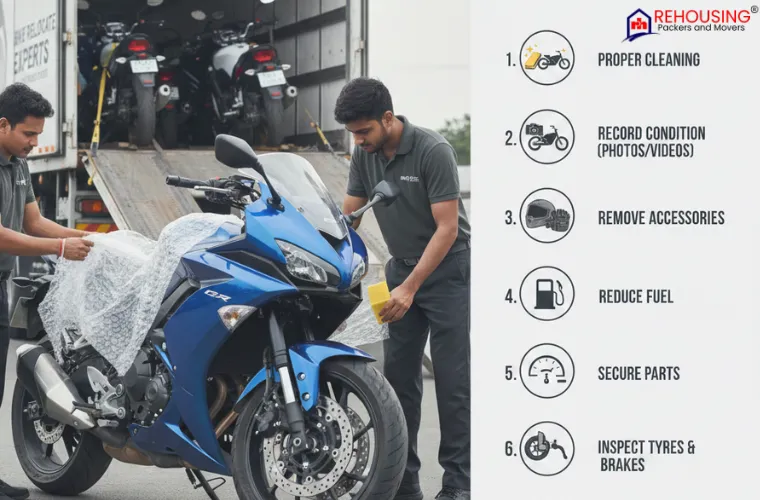
1. Give Your Bike a Proper Cleaning Before Transport
Before handing over your bike for transportation, give it a complete wash. Dust, grease, and mud often hide scratches or dents, making it difficult to assess the actual condition of the vehicle. A clean bike ensures a clear inspection for both you and the company offering packing and moving services.
A washed surface also helps during packaging. Materials like bubble wrap, foam, and stretch film stick more securely to a clean body, giving better protection during long-distance travel. Whether you're preparing for a big relocation or sending your bike through a courier partner, beginning with a clean bike simplifies everything that follows.
2. Record the Condition of Your Bike with Photos and Videos
One of the smartest things you can do before transport is to capture clear photos and videos of your bike. Take close-up shots of all critical parts like the fuel tank, engine sides, panels, indicators, and tyres. This creates a record of your bike's current condition.
Reliable packers and movers themselves encourage this step because it avoids confusion later. If you choose a car and bike transport service with transit insurance, these images become extremely helpful for documentation. A few minutes spent taking photos can save you from unnecessary disputes later.
3. Remove All External Accessories and Personal Belongings
Before packing begins, remove every loose attachment or personal item from the bike. Many people forget small things like chargers, mobile holders, seat covers, handle grips, and small tools stored in the bike's compartment. These items can get damaged easily during loading and unloading.
Remove saddlebags, extra indicators, decorative stickers, or any custom fittings that may not survive the journey. Most packers and movers advise keeping these items separately because they cannot take responsibility for loose accessories. This small step ensures your bike is packed neatly without any risk of damage.
4. Reduce the Fuel Level to Ensure Safe Handling
When transporting a bike, the fuel tank should not be full. Ideally, the tank must contain just enough fuel for basic movement, around 10% to 15%. A full tank increases the weight of the bike and also poses a safety risk, especially when several vehicles are loaded together in a container.
Every professional bike and car transport service follows this guideline because it reduces the risk of leakage and makes loading easier. During long-distance relocation, temperature changes may also cause fuel expansion, which can create pressure inside the tank. Keeping it low ensures a safer and smoother shifting experience.
5. Secure All Movable Bike Parts Before Packing
Before your bike is packed, ensure that movable parts are tightened or locked. Check the mirrors, handle, carrier, crash guard, and indicator fittings. The handle should be adequately locked so that the bike doesn't move unnecessarily during transportation.
A stable bike allows packers and movers to wrap it more effectively using foam, bubble wrap, and stretch film. When you reduce unnecessary movement, the chances of scratches or breakage decrease significantly. This is especially important if your transport will involve rough roads, long distances, or shared vehicle containers. Ensuring stability is one of the simplest ways to protect your bike throughout its journey.
6. Inspect Tyres, Brakes, and Battery Before Handing Over
A quick mechanical check can prevent unexpected problems. Make sure your tyres are neither over-inflated nor under-inflated. Over-inflation increases the risk of bursting due to heat or pressure during the journey, while low inflation makes the bike difficult to load on ramps.
The brakes should also be in proper working condition. Functional brakes help transport staff move the bike safely within the loading area. For long-distance or interstate relocation, some service providers recommend disconnecting the battery to prevent electrical issues. These small checks help ensure a trouble-free process from the moment the bike is picked up.
7. Choose a Trustworthy Packers and Movers Company
The most crucial step is selecting the right professionals for the job. Every company offering packing and moving services does not specialise in bike transport. Choose a provider that offers dedicated bike transport services, uses proper packing material, and follows a systematic loading process. Reliable companies offer features such as:
Transit insurance
GPS tracking
Doorstep pickup and delivery
Professional packing
Verified transport vehicles
Whether you're preparing for an office relocation, house shifting service, or sending your bike through a courier partner, a trustworthy moving company ensures peace of mind and safe delivery. Experienced packers and movers understand how to handle vehicles without causing any damage, making them the best choice for long-distance bike transport.
Conclusion
Preparing your bike for transport is a simple process when you follow the proper steps. From cleaning the vehicle to checking mechanical parts, securing attachments, reducing fuel, and selecting professional packers and movers, every step plays a role in ensuring your bike reaches safely.